4097 Elvis Presley Blvd. Memphis, TN 38116


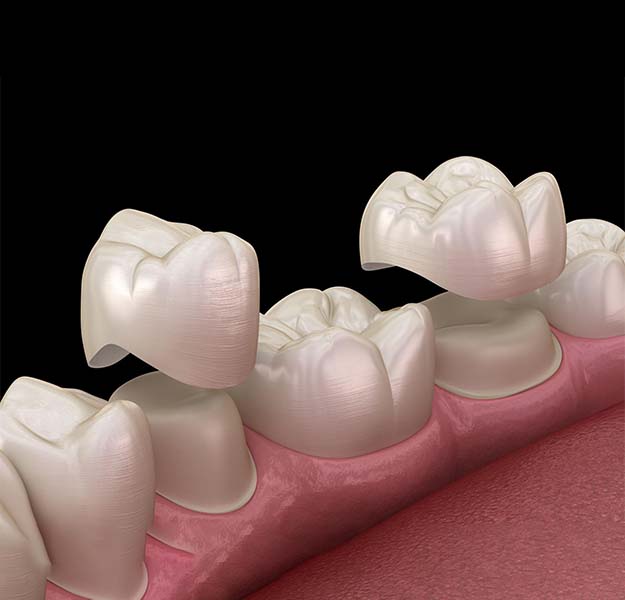
Improving the strength and appearance of damaged teeth.
Crowns are a form of dental restoration that can strengthen a tooth or improve its shape. They are typically used for teeth that have been damaged, worn down, or affected by tooth decay.
When a crown is placed, it is cemented onto the existing tooth and covers the portion of the tooth above the gum line, serving as the new outer surface. Crowns can be made from various materials such as porcelain, metal, or a combination of both. Porcelain crowns are often preferred for their ability to closely match the color and translucency of natural teeth, in addition to being highly durable.
Crowns or onlays (partial crowns) are needed when there is insufficient tooth strength to support a filling. Unlike fillings placed directly in your mouth, a crown is created outside of your mouth. Your custom-made crown is crafted in a lab using your tooth impression, allowing a dental technician to evaluate your bite and jaw movements. This ensures that your crown fits perfectly with your bite and jaw movements, allowing for normal function once it is placed.
Reasons for Getting a Crown
- Restoring broken or fractured teeth: Crowns are used to restore the original shape and size of a broken or cracked tooth.
- Reinforcing large fillings: When a tooth has a large filling, a crown may be necessary to provide additional strength and support.
- Protecting decayed teeth: Crowns can protect the remaining tooth structure when a tooth is severely decayed.
- Replacing fractured fillings: A crown can replace a fractured or damaged filling in a tooth.
- Cosmetic enhancement: Crowns can enhance the appearance of discolored, misshapen, or uneven teeth.
- Securing after root canal treatment: Crowns protect and restore teeth that have undergone root canal treatment.
The Crown Procedure
- Initial Appointment: During your first visit, our dentists will take impressions of your teeth to create a customized crown. A temporary crown will be placed to protect your tooth while the permanent crown is being fabricated.
- Follow-Up Appointment: At the second appointment, the temporary crown will be removed, and the permanent crown will be meticulously placed to ensure it fits accurately and aligns properly with your bite.
Benefits of Dental Crowns
- Strength and Durability: Crowns are made from strong materials that can endure over time with proper care.
- Improved Appearance: Crowns enhance the natural aesthetics of your teeth, revitalizing the overall appearance of your smile.
- Restored Functionality: Crowns restore the ability to eat and speak comfortably. They also protect damaged teeth, preventing further decay or breakage.