5144 Riverdale Road, Suite 106 Memphis, TN 38141


The Importance of Routine Dental Exams
Routine dental exams are crucial for maintaining good oral health. They not only help identify and treat potential problems early on, but can also save you money in the long run by preventing the need for more expensive procedures later. The Academy of General Dentistry recommends twice-yearly checkups for people of all ages.
What to Expect During a Dental Exam
During a dental exam, Dove Family Dentistry's dentists will perform a thorough examination of your mouth using a variety of tools, including:
- Mouth mirrors and dental picks: to visually examine your teeth and gums for signs of decay, cracks, or other abnormalities.
- High-intensity lights: to provide a clear view of all areas of your mouth.
In addition to the visual exam, our dentists will also:
- Review your medical history: to assess how any medical conditions or medications you are taking may affect your oral health.
- Perform an oral cancer screening: to check your face, neck, lips, tongue, throat, tissues, and gums for any signs of oral cancer.
- Evaluate your gums for gum disease: This may involve measuring the depth of the pockets around your teeth and checking for any signs of inflammation or bleeding.
- Examine your existing restorations: such as fillings, crowns, and dentures, to ensure they are in good condition.
Digital X-Rays for Clearer Images and Less Radiation
At Dove Family Dentistry, we are committed to providing you with the safest and most advanced dental care possible. That's why we utilize digital X-ray technology in our office. Digital X-rays offer several advantages over traditional X-rays, including:
- Clearer images: allowing our dentists to diagnose problems more accurately.
- Reduced radiation exposure: for your safety.
- Faster processing times: meaning less time spent waiting in the dental chair.
Oral Cancer Screenings: Protecting Your Overall Health
We understand that your oral health is an important part of your overall well-being. That's why we include an oral cancer screening as part of your routine dental exam. Oral cancer is a serious condition, but early detection and treatment can significantly improve the chances of a successful outcome.
Our team is trained to identify early signs and symptoms of oral cancer and pre-cancerous conditions during a simple, quick screening. This screening involves:
- A visual examination of your entire mouth: including your lips, tongue, throat, and gum tissue.
- A physical examination of your mouth and throat tissues: to feel for any lumps or abnormalities.
If we detect any areas of concern, we may recommend a follow-up test, such as a brush biopsy, to rule out oral cancer.
In addition to the screenings performed at our office, there are several things you can do to help reduce your risk of oral cancer:
- Avoid tobacco products and limit alcohol consumption.
- Maintain a healthy, balanced diet.
- Protect your lips from the sun by using lip balm with SPF.
Dental Cleanings: Removing Plaque and Keeping Your Smile Bright
Regular professional dental cleanings are an essential part of maintaining good oral health. Even with careful brushing and flossing at home, it can be difficult to remove all plaque and tartar buildup from your teeth. That's where professional cleanings come in!
During a dental cleaning at Dove Family Dentistry, our hygienist will:
- Carefully remove plaque and tartar deposits from your teeth.
- Polish your teeth to remove surface stains and leave them sparkling clean.
- Floss your teeth thoroughly.
We recommend scheduling dental cleanings twice a year in conjunction with your regular dental exams. This will help prevent the development of gum disease and other oral health problems.
By following a consistent routine of at-home oral hygiene and regular dental checkups and cleanings, you can maintain a healthy smile for life!
Brushing Instructions
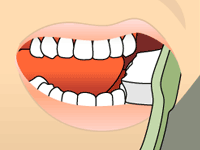
Brushing: Step 1
Make sure to position your toothbrush at a 45 degree angle towards your gum line.
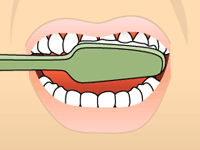
Brushing: Step 2
Use a gentle circular motion when brushing.
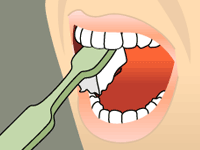
Brushing: Step 3
Remember to brush all surfaces of each tooth - outer, inner, and chewing.
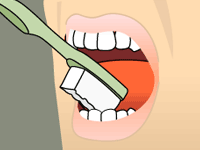
Brushing: Step 4
Remember to use the tip of your brush when cleaning the inner surface of your front teeth.
Flossing Instructions
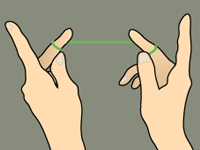
Flossing: Step 1
Wrap about 18 inches of floss around your fingers as demonstrated. The majority of the floss should be wound around one finger, and as you use it, the other finger will take it up.
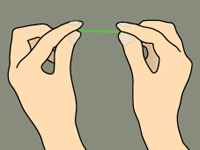
Flossing: Step 2
Use your thumbs and forefingers to gently slide about one inch of floss between your teeth.
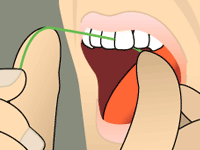
Flossing: Step 3
Grip the floss firmly and carefully glide it between your teeth. Next, shape the floss into a C and gently insert it under your gums against one tooth.
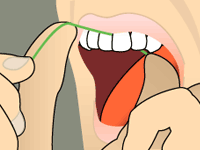
Flossing: Step 4
Remember to move the floss in an up and down motion for each tooth.