4097 Elvis Presley Blvd. Memphis, TN 38116



Exams
It is important to have regular dental checkups to maintain the health of your teeth and gums. These checkups can prevent expensive problems from getting worse and help identify any issues early on. The Academy of General Dentistry recommends scheduling checkups twice a year for people of all ages.
The Process
The dentist will start by visually inspecting your mouth using dental instruments such as mouth mirrors, dental picks, and bright lights. They will examine for cracked and decayed teeth, as well as evaluate other key factors.
- Reviewing medical history: The dentist will assess how any new medical conditions or illnesses may affect your dental health.
- Examining for tooth decay: Your mouth will be checked for cracked or decayed teeth.
- Screening for oral cancer: The dentist will inspect the face, neck, lips, tongue, throat, tissues, and gums for any signs of oral cancer.
- Evaluating gum health: Your gums and the bone around your teeth will be examined for any indications of gum disease (periodontal disease).
- Checking existing dental restorations: Current fillings, crowns, and other dental restorations will be reviewed to ensure they are in good condition.
Digital X-Rays
At our office, we emphasize the use of state-of-the-art dental technology to provide our patients with the safest and most convenient treatment options. Our advanced digital X-ray technology not only saves time and produces clearer dental images but also exposes patients to significantly less radiation compared to traditional X-ray methods.
We are committed to ensuring your dental experience is as comfortable as possible. If you have any questions, please don't hesitate to ask during your next appointment.
Oral Cancer Screenings
At our office, we prioritize not just your smile but your overall well-being. Our dental care approach is holistic and includes an oral cancer screening as part of your regular exam. Early detection and treatment of oral cancer are critical, as it can be life-threatening if left untreated.
We have the expertise and resources to identify early signs and symptoms of oral cancer and pre-cancerous conditions. While these symptoms may sometimes be related to less serious issues, it's important to visit our office to rule out the possibility of oral cancer. Common symptoms include:
- Presence of red or white spots or sores in the oral cavity
- Sores that easily bleed or do not heal
- Development of a lump, thickening, or rough area
- Experiencing pain, tenderness, or numbness in the mouth or on the lips
- Difficulty with chewing, swallowing, speaking, or moving the jaw or tongue
Our team is trained to thoroughly screen your oral cavity for signs of cancer or precancerous conditions, beyond just your teeth. We will visually examine and feel the tissue in your mouth and throat for any abnormalities. If any areas of concern are found, we may perform a brush test to collect cells for further analysis in a laboratory, and recommend a biopsy if necessary.
During your checkup, you will receive an oral cancer screening. To prevent oral cancer, it is important to avoid tobacco products, drink alcohol in moderation, maintain a healthy diet, and protect your skin and lips from the sun.
Remember to ask your dentist for an oral exam at your next appointment. Early detection of oral cancer can greatly improve the chances of successful treatment.
Dental Cleanings
Regular professional dental cleanings are essential for maintaining good oral health, as recommended by the Academy of General Dentistry. Even with regular brushing and flossing, it can be challenging to completely remove hardened plaque and tartar at home. That's why it is advised to schedule a professional cleaning with your dentist every six months.
During your cleaning appointment, our staff will carefully remove any plaque and tartar buildup, polish your teeth, and floss thoroughly. A comprehensive examination will also be conducted to ensure your mouth is in optimal health.
Neglecting your oral hygiene routine, both at home and professionally, can result in periodontal disease and additional costs for treatment. Keeping up with your oral hygiene is crucial for maintaining a healthy smile!
Brushing Instructions
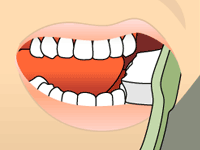
Brushing: Step 1
Angle your toothbrush at 45 degrees towards your gums.
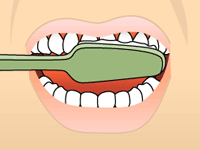
Brushing: Step 2
When brushing, please use a gentle circular motion.
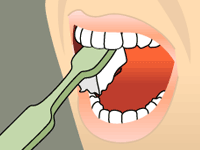
Brushing: Step 3
Make sure to brush every surface of each tooth, including the outer, inner, and chewing surfaces.
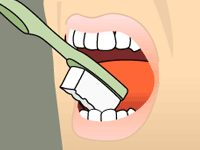
Brushing: Step 4
Use the bristles of your toothbrush to thoroughly clean the inner surfaces of your front teeth.
Flossing Instructions
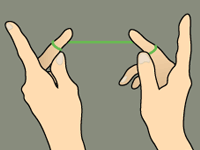
Flossing: Step 1
To start flossing, wrap about 18 inches of floss around one finger, keeping most of it on that finger. The other finger will wind up the used floss as you go.
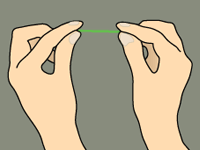
Flossing: Step 2
Gently slide about one inch of floss between your teeth using your thumbs and index fingers.
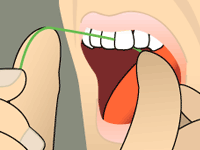
Flossing: Step 3
Hold the floss securely and glide it carefully between each tooth. Then, form a C shape with the floss and gently slide it under your gums next to a tooth.
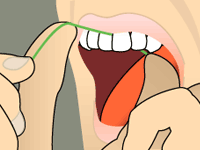
Flossing: Step 4
Remember to move the floss up and down for each tooth.