4097 Elvis Presley Blvd. Memphis, TN 38116


Reliable and Genuine Tooth Replacement Options
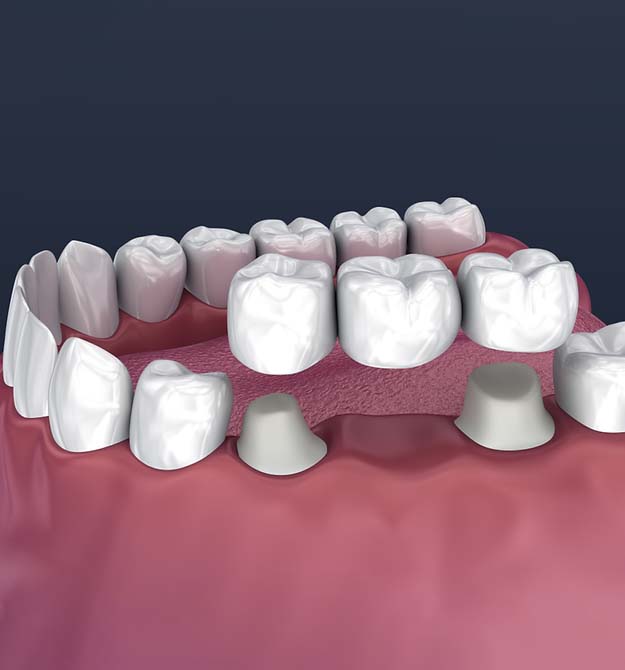
For individuals with missing teeth, a bridge offers a replacement option that is both functional and aesthetic. Bridges play a crucial role in preserving facial shape and distributing bite pressure.
By utilizing artificial teeth, bridges effectively fill in the gaps left by missing teeth while maintaining a natural appearance. They can be made from materials such as gold, alloys, porcelain, or a combination of these, and are securely attached to neighboring teeth for stability.
The durability of a bridge depends on the health and strength of its foundation – the surrounding teeth, gums, and bone to which it is anchored. Therefore, maintaining the health of neighboring teeth, gums, and jaw bone is essential for the long-term success of a bridge.
Benefits of Dental Bridges
Dental bridges offer several advantages over removable dentures:
- Enhanced Appearance: Dental bridges restore the natural aesthetics of your smile.
- Improved Speech: Bridges can enhance your ability to speak clearly.
- Restored Chewing Function: Bridges enable effective chewing of food.
- Prevents Teeth Movement: Bridges prevent remaining teeth from shifting.
- Preserves Facial Structure: Bridges contribute to maintaining the natural shape of your face.
- Boosted Confidence: A restored smile with bridges can increase your self-confidence.
Types of Dental Bridges
There are two main types of dental bridges:
- Traditional Fixed Bridge: This common type of bridge includes two crowns on the abutment teeth with pontics filling the gap of the missing teeth. It is permanently cemented to the abutment teeth.
- Implant-Supported Bridge: This type of bridge utilizes dental implants for support instead of crowns on abutment teeth, providing enhanced stability and durability compared to traditional bridges.
Considering Dental Bridges?
If you have missing teeth and are looking for a lasting solution to improve your smile and ability to eat, dental bridges may be the perfect option for you. Reach out to Dove Family Dentistry in Whitehaven today to set up a consultation. Our experienced dentists will evaluate your specific needs and help you decide if dental bridges are the best choice for you. Take the first step towards a revitalized smile by contacting us now. Click here to get in touch with us today.